Ini Motif dan Hal Memberatkan Hukuman Tiga Prajurit TNI Pembunuh Kacab Bank

New Policy: Motif dan Faktor Penambah Hukuman Tiga Prajurit TNI Pembunuh Kacab Bank
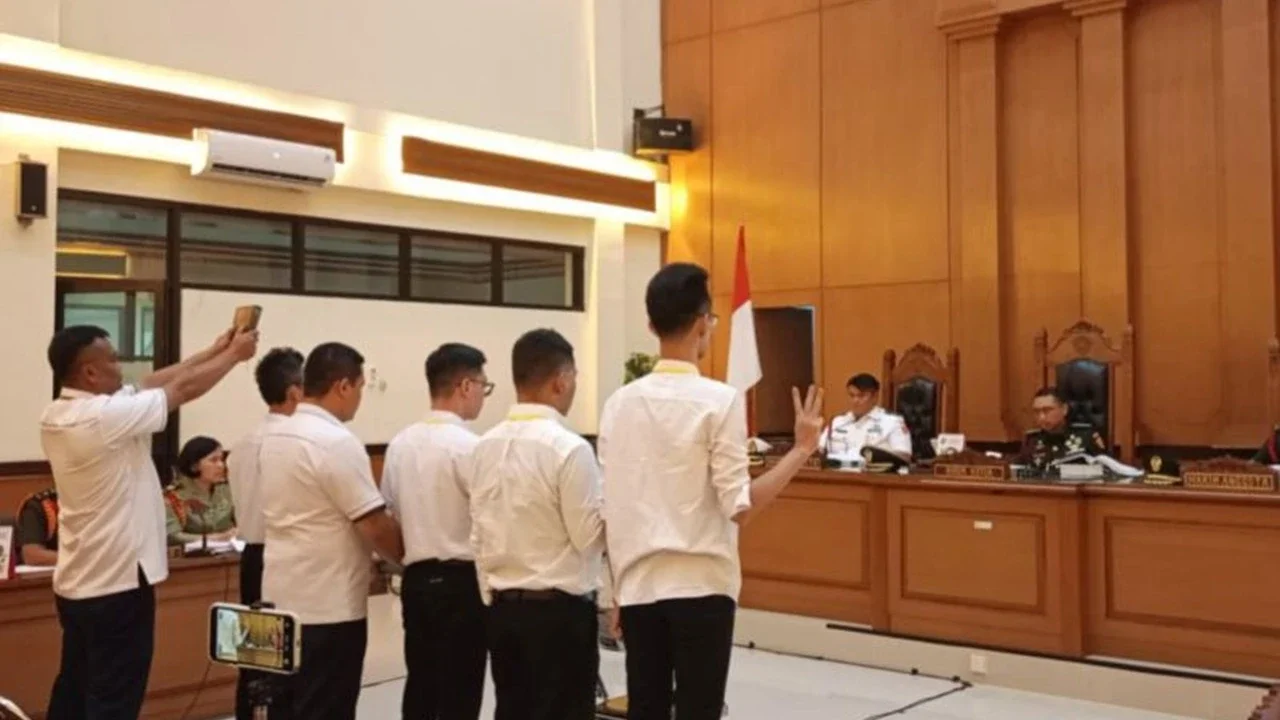
Beritanew.com – Under the New Policy, the military court in Jakarta has been scrutinizing the case of three TNI soldiers accused of killing the head of a bank branch, Muhammad Ilham Pradipta. The trial, which took place on Senin (18 Mei 2026) at Pengadilan Militer II-08, highlighted the motivations behind the crime as well as the aggravating factors that could influence the sentencing. Oditur Militer Mayor Chk Wasinton Marpaung revealed that the three defendants acted primarily due to their desire to obtain financial gain, a key aspect emphasized under the New Policy to ensure accountability for criminal actions that compromise military integrity.
“Para terdakwa melakukan tindak pidana karena ingin mendapatkan uang,” kata Wasinton.
The New Policy mandates a stricter evaluation of motives and exacerbating circumstances, which was evident in the tuntutan presented during the proceedings. Oditur Marpaung noted that the defendants’ actions violated Sapta Marga and Sumpah Prajurit butir kedua, as well as Delapan Wajib TNI butir ketujuh. These breaches were considered critical in escalating the severity of their punishment, underscoring the policy’s aim to deter misconduct by linking it directly to disciplinary consequences. Additionally, the policy requires a comprehensive assessment of how such acts affect the reputation of the TNI, particularly Kopassus, where the perpetrators were stationed.
One of the most significant aspects of the New Policy is its focus on the emotional and social impact of crimes committed by military personnel. This was clearly demonstrated in the case, as the family of the victim suffered profound losses. The wife lost her husband, while the children were left without a father. Wasinton emphasized that the lack of remorse from the defendants further justifies the harsher penalties under the updated framework. “Para terdakwa tidak pernah meminta maaf kepada istri korban dan keluarganya,” ujar Wasinton, highlighting how the New Policy accounts for psychological factors in sentencing.
Hukuman yang Diusulkan untuk Tiga Terdakwa
The New Policy also dictated the specific sentences each defendant would receive based on their roles in the crime. Serka MN, for instance, faced a 12-year prison term and dismissal from military service. His charges included the execution of the victim and the concealment of the body, which were deemed severe under the policy’s guidelines. Kopda FH, on the other hand, was sentenced to 10 years in prison, as his actions involved the deprivation of freedom that led to the victim’s death. Serka FY received a lighter penalty of 4 years, attributed to his involvement in the act of taking control of the victim, a factor that the New Policy considers in proportionality.
During the trial, the Oditur underscored the alignment of the sentencing with the New Policy’s principles. “Dengan mengingat pasal-pasal yang didakwakan serta peraturan lain yang berkaitan, kami mohon agar para terdakwa dijatuhi pidana,” tandas Wasinton. This statement reflects the policy’s emphasis on clear legal consequences, ensuring that those who breach military ethics face appropriate punishment. The New Policy also incorporates the idea of collective responsibility, which was evident as the defendants were found to have coordinated their actions, adding to the gravity of the offense.
Konteks Kejadian dan Persidangan
The incident occurred in a shopping mall in Ciracas, Jakarta Timur, on 20 Agustus 2025, around 14.00 WIB. The New Policy was applied to examine the sequence of events, revealing that the soldiers executed the victim and then covered up the crime. Their involvement in the murder of a rental car business owner at KM45, Tol Tangerang-Merak, on 10 Maret 2026, further complicated the case. The policy’s application in this context highlights its role in addressing both individual and group criminal behavior.
During the investigation, it was discovered that the perpetrators had long-standing connections, which the New Policy aims to counteract. The policy requires that any prior relationships among suspects be evaluated to determine if they contributed to the escalation of the crime. “Lah makanya, kok keluar dari jalur. Kenapa cari aparat, kenapa kemudian cari preman, bahkan terdakwa akhirnya cari orang-orang hitam itu,” cecar Hakim, illustrating how the New Policy seeks to identify and penalize collusion or negligence within the military ranks.
Additionally, the New Policy mandates that defense teams present arguments based on the updated framework. In this case, the lawyers for the accused raised exceptions to the tuntutan, but the court remained firm in its application of the policy. The trial proceeded with the agenda of assessing the validity of these exceptions, ensuring that the punishment under the New Policy was thoroughly justified. Colonels and other officials involved in the case emphasized the importance of the policy in maintaining discipline and public trust in the TNI’s operations.